YI · Yi’s reflection perspective
Lenormand · Dog — image, meaning and reflection
Reliable relationships grow through everyday trust and support at key moments; notice how trust is built. Who can share long-term mutual trust with you?
Use cards for reflection, not prediction. Cards offer a starting point for reflection. Check the facts and make your own decisions.
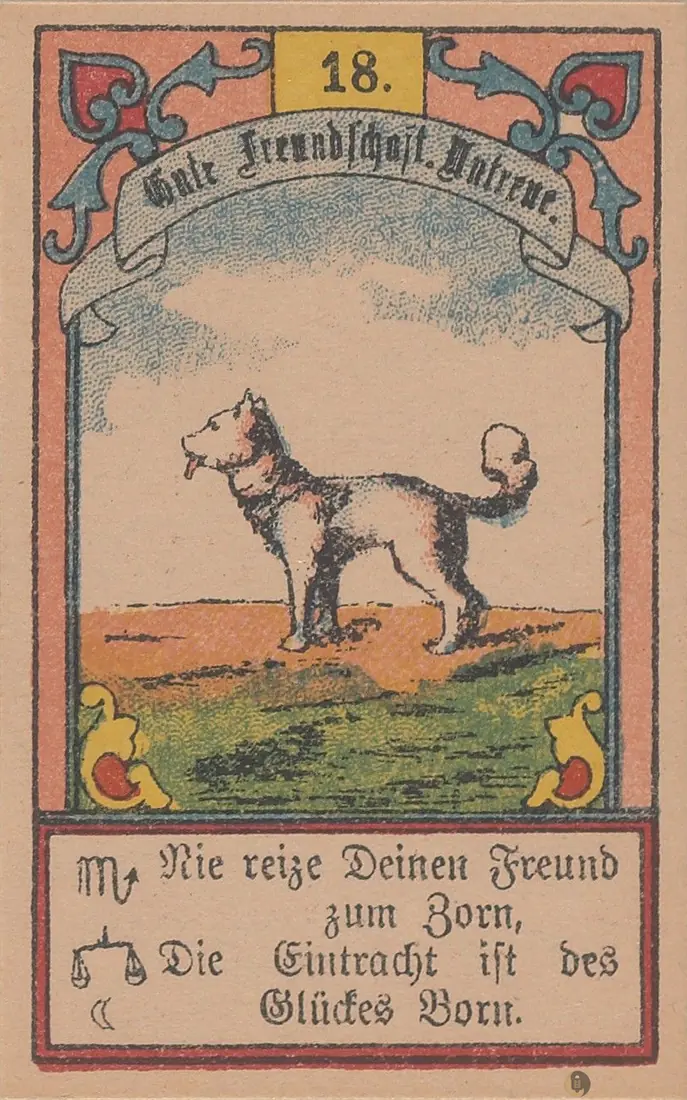
Look at the image before your associations
A dog stands outdoors with its head turned to one side.
Pause on this image. Write one detail you can actually see, then a moment from your life that it brings to mind. Keep the observation separate from the association; yours need not match anyone else’s.
Yi’s reflection perspective
These are Yi’s modern reflection notes for self-understanding. They do not establish facts about an event or claim a single interpretation across traditions.
Reliable relationships grow through everyday trust and support at key moments; notice how trust is built.
- friend
- trust
- loyal
- support
- partner
- reliable
Bring the image into an everyday situation
An illustrative exercise, not a description of you.
A friend offers help. Clarify whether you need listening, advice or a practical task, and make the boundaries understandable.
Write your own response
- Who can share long-term mutual trust with you?
- What experience supports this association? What still needs to be checked?
- What small step could you try today, and when will you review what changed?
From an observation to a decision
Choose an observation that matters to you and turn it into an open question. In Yi, start a cast yourself, study its classical sources, record your decision and return to review it. Cards provide context; they do not select a hexagram.
Who can share long-term mutual trust with you?Try a reflective draw Get Yi. Continue your question.
Image sources and editorial notes
Card art: Ch. Didot, Paris, c. 1890 · Beinecke Rare Book & Manuscript Library, Yale University · Public domain
View the image source recordReflection text: Yi editorial team. Image provenance and modern exercises are identified separately; Yi’s cross-tradition associations are not presented as historical meanings.